Blog
Latest


The End of an Era: How the EU's De Minimis Removal Reshapes Global E-commerce
The European Union has fundamentally altered the landscape of global e-commerce by eliminating its long-standing "de minimis" value thresholds for imports. As of 1 July 2021, the €22 VAT exemption for low-value parcels was abolished, meaning all goods imported into the EU are now subject to VAT. Building on this, the EU is now moving to scrap the €150 customs duty exemption, a change that will impact the final landed cost for a vast number of products. This major policy shift aims to level the playing field for EU businesses, combat tax fraud, and modernise customs processes. To manage this new system, the EU introduced the Import One-Stop Shop (IOSS), a platform designed to simplify VAT collection for non-EU sellers.
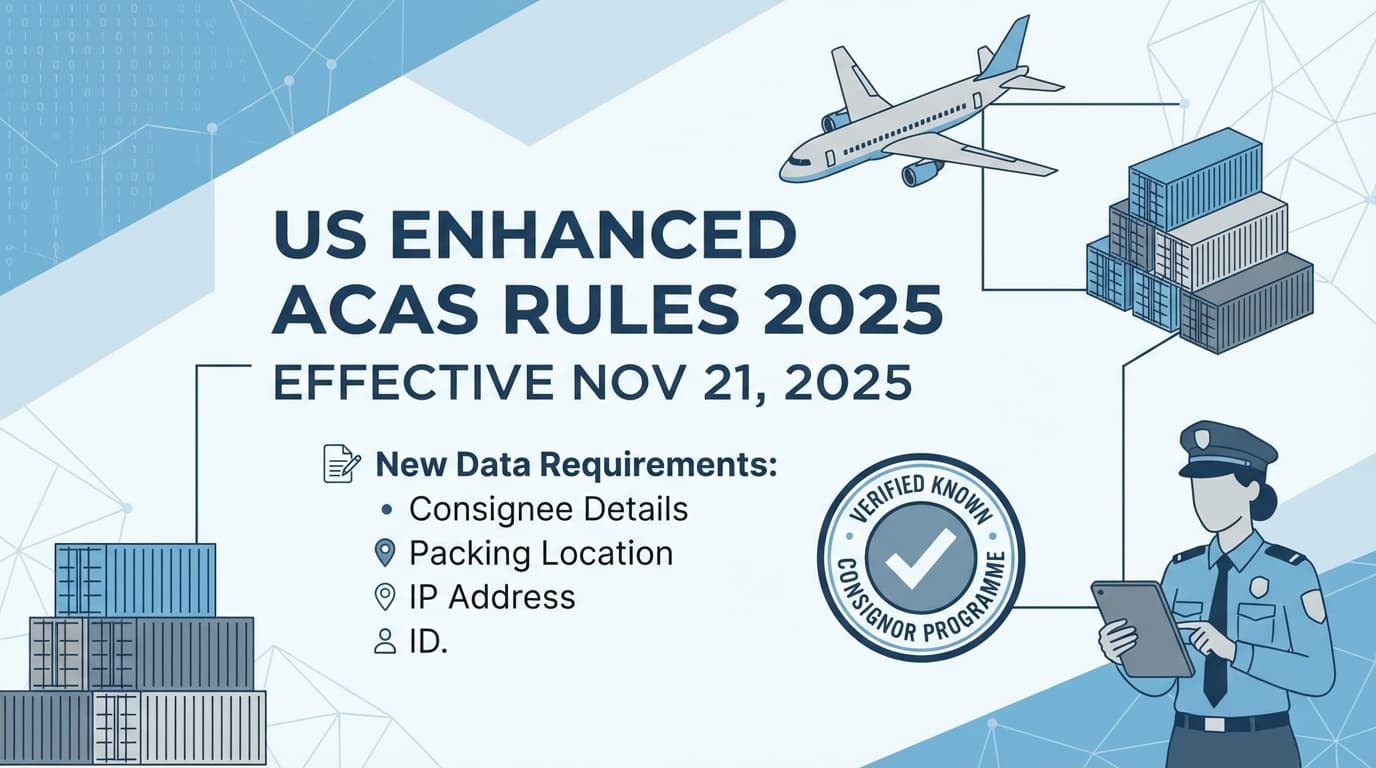
US CBP Finalises Enhanced ACAS Rules for 2025: What You Need to Know
Effective 21 November 2025, U.S. Customs and Border Protection (CBP) will implement new Enhanced Air Cargo Advance Screening (ACAS) rules. Mandatory data will now include consignee contact details and shipment packing locations. A new "Verified Known Consignor" programme will offer streamlined filing. Shippers without this status face extensive conditional data requirements, including providing unmasked IP addresses, detailed customer account information, and, in some cases, biographic data from government-issued ID.
DDP vs. DDU (DAP) in 2025: The Complete Guide for E-commerce Sellers
DDP and DDU differ in who pays import duties and taxes. Under DDP, the seller pays all customs charges and handles clearance, making delivery easier for the buyer. Under DDU, the buyer pays these fees when the parcel reaches customs. Choose DDP if you want to offer customers a clear total price. Choose DDU if you prefer the buyer to handle import costs. Use our duty calculation tool to check duties and taxes before shipping.

China Tariffs Cut by 10% as US and China Strike Landmark Trade Deal
Latest China Tariff News (November 2025): The US and China have reached a major trade deal that cuts import tariffs by 10%, suspends Chinese retaliation, and reopens markets for US agriculture and technology. The agreement aims to stabilize global trade and ease supply chain pressures between the world’s two largest economies.
How to Calculate Import Duty from China to USA: A Step-by-Step Guide
To calculate import duty from China to the USA, first find your product’s HTS code to get the duty rate. Multiply this rate by the customs value of your goods. Finally, add any additional Section 301 or 232 tariffs and include other required fees like the Merchandise Processing Fee.

How to Import Goods Into the US in 2025: CBP Requirements, Licenses, Duties & Documentation
To import into the US, register as an Importer of Record using an EIN or SSN and submit CBP Form 5106. Classify your products using the correct HTSUS code to calculate duties. Check if your goods need approval from agencies such as the FDA, USDA, EPA or CPSC. For ocean shipments, submit the Importer Security Filing (ISF or 10+2) at least 24 hours before loading. Most shipments over 2,500 dollars require a customs bond. Prepare documents like the commercial invoice, packing list, bill of lading and make sure items are marked with their country of origin. After arrival, a customs broker or importer files entry documents and duties must be paid within 10 business days. Keep all import records for five years.

Goodbye Type 86: What Importers Must Know in 2025
The United States ended its de minimis exemption on August 29, 2025, removing duty free treatment for shipments under 800 dollars. This change retired Type 86 entries and made Type 11 Informal Entry the new standard for small imports. Importers must now pay duties and taxes on all shipments and provide accurate customs documentation. Businesses should update pricing, compliance processes, and logistics to align with the new U.S. import rules.